Intervals.icu CSV Import Guide: Upload a Training Plan From AI or a Spreadsheet
Learn how to import a CSV training plan into Intervals.icu with TrainingDojo using an API key and athlete ID, plus how Pro structured push and plan management fit in.
Guides for importing training plans, converting AI workouts into structured workouts, and moving endurance training data into the platforms athletes actually use.
Learn how to import a CSV training plan into Intervals.icu with TrainingDojo using an API key and athlete ID, plus how Pro structured push and plan management fit in.
A clear comparison of what TrainingDojo supports today: TrainingPeaks upload, Intervals.icu upload, Zwift .zwo export, and what is still in progress.
TrainingDojo converts AI workout text, coach notes, and interval descriptions into Zwift-ready .zwo files for compatible bike and run workouts.
Learn how to convert plain-English workout text into Zwift-compatible .zwo workouts without manually rebuilding every interval block.
A simple screenshot-supported guide for finding the Production_tpAuth cookie so TrainingDojo can save your TrainingPeaks connection.
TrainingDojo supports the full TrainingPeaks workout type catalog, including multisport, endurance, strength, rest day, custom, and other calendar entries.
Brick workouts teach athletes to execute one discipline immediately after another. TrainingDojo can now structure and upload Brick workouts to TrainingPeaks.
TrainingDojo now detects TrainingPeaks coach accounts, lets coaches choose an attached athlete, and uploads CSV or structured workouts directly to that athlete calendar.
AI can describe workouts well, but endurance platforms need structured blocks, targets, and lengths. Here is the clean workflow for turning text into platform-ready workouts.
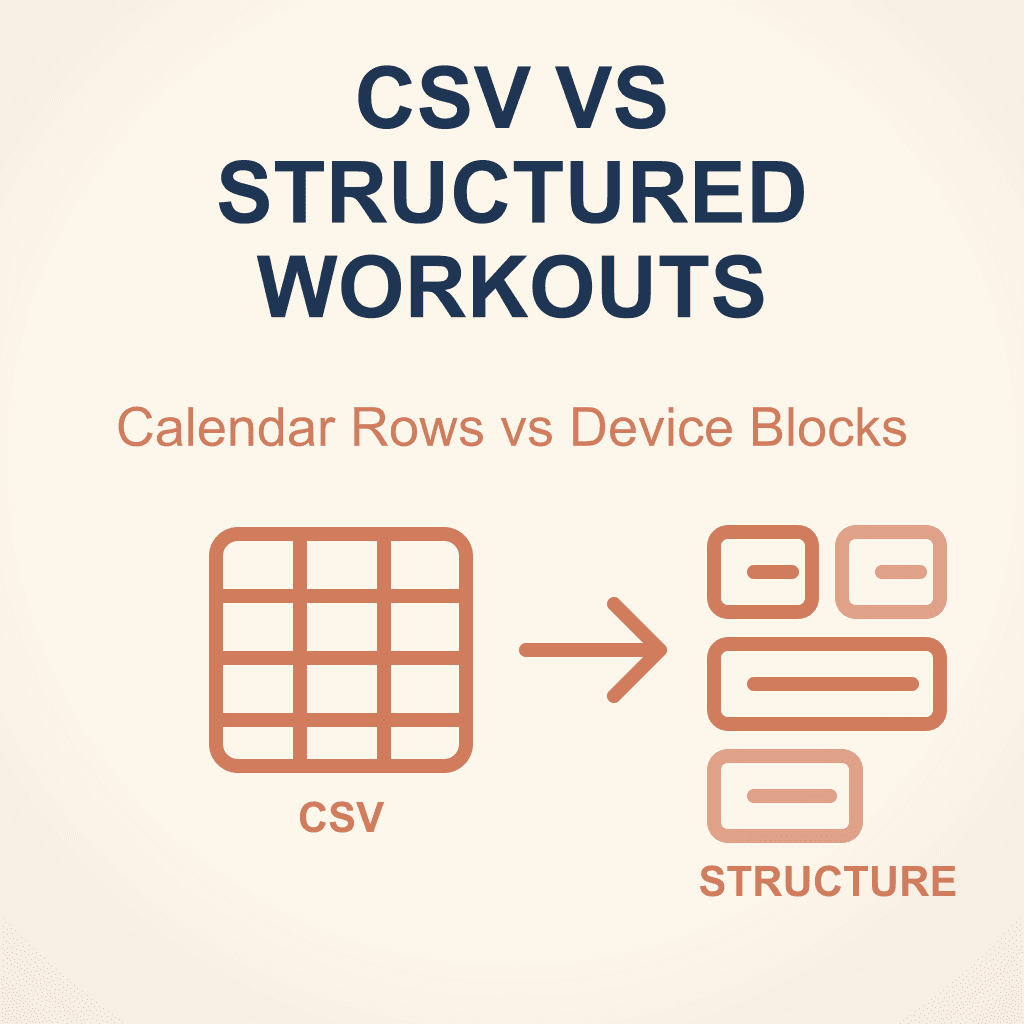
CSV is excellent for importing a whole calendar. Structured workouts are what devices and workout builders need for intervals, targets, and sync-ready execution.
A CSV plan gets your calendar loaded. Bulk structuring turns every workout description into editable interval blocks and platform-ready workout data.
Importing a plan is only half the workflow. Learn how to review uploaded plans, edit workouts, and bulk-delete stale TrainingPeaks plans with TrainingDojo.
Training plans tell you what to do. Fueling recommendations tell you how to support the work. Here is how to use pre, during, and post-workout targets.
A very simple, screenshot-supported guide for finding the TrainingPeaks bearer token from browser Developer Tools.
When a workout does not show up on your Garmin, the problem is usually the workout type, sync window, or device flow. Here's how the TrainingPeaks-to-Garmin pipeline actually works and how to keep it reliable.
TrainingDojo can now export Zwift-ready `.zwo` files for compatible bike and run structured workouts. Here's how to use ZWO files without creating extra work.
CSV, ZWO, FIT, ERG, and MRC all solve different problems. Here's what each format is for, what TrainingPeaks actually supports, and when TrainingDojo is the faster path.
If your training plan lives in ChatGPT, Excel, Google Sheets, or a coach PDF, TrainingPeaks still makes you rebuild it manually. Here's why that gap exists and how athletes actually solve it.
Whether you're chasing a sub-25 5K or a sub-45 10K, your training paces should be based on your current fitness. Build a VDOT-based plan and import it to TrainingPeaks in minutes.
Triathlon planning means juggling three sports, brick workouts, and limited time. AI handles the complexity — and TrainingDojo is the only tool that imports the entire multisport plan to TrainingPeaks.
The half marathon demands real training — not just running more. Build a personalized plan with VDOT-based paces for sub-2:00, sub-1:45, or sub-1:30, and import it to TrainingPeaks.
TrainingPeaks has no bulk upload feature for athletes. Manual entry takes hours. Here's every method we tested — and the one tool that actually works.
Generic marathon plans don't know your fitness, schedule, or goal time. AI builds a personalized plan with exact VDOT paces — and TrainingDojo imports it to TrainingPeaks automatically.
AI can generate cycling training plans that rival what most coaches produce — periodized, FTP-based, and tailored to your schedule. Here's how to build one and get it onto TrainingPeaks.
We tested every AI training plan generator available — from ChatGPT to dedicated platforms. Here's which ones actually produce usable, periodized plans you can import to TrainingPeaks.
Whether your plan came from ChatGPT, a coach, a spreadsheet, or an AI generator, here's how to bulk import it to TrainingPeaks without manual entry. TrainingDojo is the only tool that does this.
ChatGPT can generate excellent training plans, but there's no way to import them to TrainingPeaks — until now. TrainingDojo is the only tool that bridges AI-generated plans and TrainingPeaks.
Your recent 5K, 10K, or half marathon time reveals your exact training paces. Learn how Jack Daniels' VDOT system works, calculate your zones, and build a plan that targets your next PR.
Estimate VO2 max from running race performance or cycling power-to-weight, then use the result to guide VO2 max intervals, threshold work, and aerobic training.
Estimate lactate-threshold heart rate or threshold power from field-test data, then use threshold targets for tempo, threshold intervals, heart-rate zones, and training plans.
Use a critical power calculator to estimate CP and W Prime from 3-minute and 12-minute efforts, then apply critical power to VO2 max, anaerobic, and race-specific training.
Calculate cycling variability index from normalized power and average power, then use VI to understand pacing steadiness, surges, race execution, and workout design.
Use an FTP rating calculator to convert FTP and body weight into W/kg, compare cycling benchmark ranges, and decide how to improve threshold power.
Calculate Zone 2 heart-rate or power targets from FTP, lactate-threshold heart rate, or heart-rate reserve so your easy endurance training stays truly aerobic.
Use an intensity factor calculator to divide normalized power by FTP, interpret workout intensity, and connect IF to TSS, pacing, and structured cycling workouts.
Calculate W/kg from cycling power and body weight, understand power-to-weight ratio benchmarks, and use watts per kilogram to guide climbing and FTP improvement.
Calculate Training Stress Score from duration, intensity, normalized power, FTP, or threshold-relative effort so you can plan weekly load instead of guessing.
Use a running pace calculator to convert 5K, 10K, half marathon, marathon, or custom race goals into pace per mile, pace per kilometer, and useful split targets.
Calculate heart-rate training zones from lactate-threshold heart rate, resting heart rate, or max heart rate, then use those zones for running, cycling, triathlon, and Zone 2 training.
Calculate cycling power zones from FTP and learn how to use recovery, endurance, tempo, threshold, VO2 max, anaerobic, and sprint watt ranges in real training.
Use this FTP calculator guide to estimate cycling FTP from a 20-minute test, ramp test, 2x8-minute test, or 60-minute effort, then turn that FTP into power zones and structured workouts.
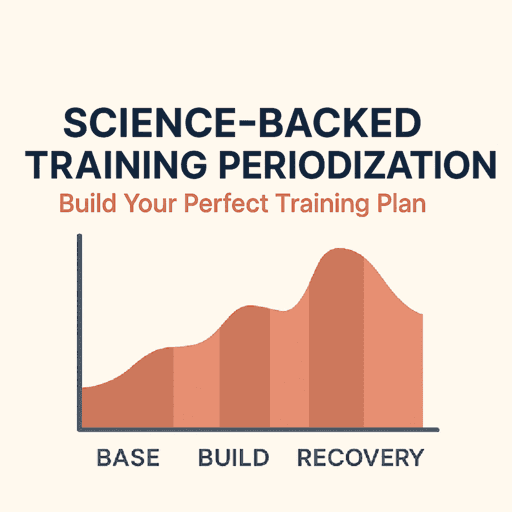
Learn the proven principles of training periodization that elite coaches use—and how AI applies these same principles to create your perfect training plan in seconds.
After winning back-to-back state championships using AI-generated training plans, I'm sharing my honest comparison of AI coaching vs traditional human coaches. The results might surprise you.
Most running plans prescribe generic workouts. Learn how to build a goal-pace training plan where every workout prepares you for your exact race-day target.
80% of runners get injured each year. Learn how to stay healthy with smart training progression, cross-training integration, and proper recovery protocols.
How I went from mid-pack Cat 3 racer to state champion in 16 weeks using AI-generated training plans—with full data, workouts, and mistakes revealed.
FTP is the most important number for cyclists and endurance athletes. Learn the proven protocols for testing FTP, threshold pace, and CSS—with tips that actually work.
Week 1: crushing it. Week 3: missing workouts. Week 6: abandoned plan. Sound familiar? Here are the 7 reasons training plans fail and how to build one that actually sticks.
You trained for months but arrived at race day flat. Learn the science of tapering and how AI optimizes your peak for race-day performance.
Sick kid, work deadline, bad weather—life happens. Learn the framework for intelligently adjusting your training plan instead of abandoning it entirely.
Most training platforms claim to be "adaptive" but still give you static plans. Learn what true adaptive training looks like and why AI is finally making it accessible to everyone.
Most self-coached athletes don't have a training plan—they have a workout collection. Learn the 7 essential components of effective training plans and build one that delivers results.
Stop manually entering workouts one-by-one. This step-by-step guide shows you how to import an entire training plan to TrainingPeaks in minutes using CSV files.